
Matthew Espinosa
Game Designer / Game Producer / CPO @ EGD Collective
Hello to whoever is viewing this page! I'm a game designer and producer, passionate about creating meaningful playful experiences that blend storytelling, education, and community impact. With over three years of experience working in collaborative development environments including serving as a combat designer and Design Director on a 60+ person game team I thrive at turning creative ideas into polished gameplay systems.
Beyond design, I’ve taken on leadership roles such as Chief People Officer at EGD Collective, where I oversee operations and mentor aspiring developers, and I’ve consulted on projects ranging from mobile platforms to arts-driven interactive experiences.
Whether I’m building mechanics in Unity, wireframing in Figma, or guiding a team through complex production cycles, I’m motivated by the challenge of using games to bring people together and tell powerful stories.
My Favorite Games!


Current Project

Charon's Corner
Design | Producer | Design Director
EGD Collective
About Me
Hello! I already introduced myself a bit on the homepage, but I'll go into more detail here now. My name is Matthew Espinosa, I'm a student in the CUNY Baccalaureate for Unique and Interdisciplinary Studies, with a focus in Digital Game Design.I've been making games for 4+ years now, but I've been playing games for as long as I can remember. Most of the consoles I played on growing up belonged to my sister, until she moved out to go to college, which is when I started to finally explore my own interest in games.Games have always been a safe space for me, a way for me to escape the chaos of the real world, even when I was a child. I grew up with difficulties learning growing up, so school was not the most fun place for me. Getting to immerse myself in worlds where I was taught to be unique and cherish being myself really helped me get through a lot of difficult times in my life.As a Game Designer, I like to focus on Combat and Movement design in the games I work on. But I also am a very skilled Project Manager and a somewhat competent Programmer, and have often had to double, sometimes even triple up on these roles. I love exploring player engagement in core systems like combat and movement, and I am a firm believer that a good skeleton like this can make any game good.I've had the privilege of working with the EGD Collective on many occasions, I am currently a Game Studio Program Fellow, acting as the current Design Director on this year's Studio Aspen 25-26 Game, Charon's Corner. I am also the current Chief People Officer in the EGD Collective, and it is my responsibility to ensure EGD runs as smoothly and as effectively as possible.I also have worked as a Design Consultant and Design Intern at organizations like Personaland and StreamerStakes respectively, iterating and ideating design proposals for their teams, which has helped me better think on my feet with iterations and quick prototypes, whether that be in software like Unity or simple wireframes in Figma.Overall, I am an enthusiastic, driven, and hard-working designer/producer with the goal to make my own mark on the industry!
Experience
These are some of the places where I've worked on games!

StreamerStakes
An online competitive gaming platform that features skill-based mini-games, leaderboards, and coin-based rewards.

EGD Collective
A nonprofit organization dedicated to higher education retention and career preparation, providing mentorship, professional
development, and project experience to students and emerging professionals in the games industry.
Personaland
An online global arts village with over 500 artists in 53 countries, offering art, music, and poetry experiences using game technology.
Where I've Been
As a game developer, I've been to a few different industry events!
(Hopefully I see you at an event soon! ;))
GDC 2025
BIPOC Games Conference
My Games
Here lies my games portfolio. Every single games project I've worked on is here, big and small.
2026

Skilamalink
Project Management | Producer | Design
Global Game Jam 2026
NYU GGJ Site: Audience Choice Award

In the Flesh
Level Design
Glik Games
2025

Charon's Corner
Design | Producer | Design Director
EGD Collective

Mom I Blew Up the Computer!
Design | Programming
Solo Project

Heavy Swing
Design | Programming
Solo Project

Mythical Messenger
Project Management | Lead Design | UI/UX
Global Game Jam 2025
2024

Project: Dreamscape
Combat Design | Project Management
EGD Collective

Ball Game
Design | Programming
Solo Project

Say That Again?
Design | Programming
Gumbo x GameMaker Game Jam

Decay & Watch
Lead Design
Discord Jam #8

Against the Tide!
Design | UI/UX
Micro Jam 2024

Directive: Explode 3D
Design | Programming
Solo Project

Directive: Explode
Project Management | Lead Design | UI/UX | Programming
EGD Waffle Games 7.0
Unfortunately... every project I've worked on before this has been lost to time.
Other Work
On this page are projects that I've worked on that aren't traditional video games.
Personaland Mobile App
Design Consultant
Personaland
As a Mobile Game Design Consultant for Personaland, I focused on conceptualizing original game ideas that encouraged users to engage more deeply with community-created art. I developed five unique game concepts designed to connect players with the platform’s music, poetry, and visual art in playful, interactive ways. I spent a lot of time studying old concepts for this app that had been done years before me, incorporating some of the old designs into my new more modern prototypes. To support early planning for a potential mobile platform, I also created low-fidelity wireframes in Figma, mapping out features and user flows. The project gave me valuable experience in turning abstract ideas into tangible designs, and it strengthened my ability to bridge creativity with functionality in the early stages of development.
StreamerStakes
Product Research & Design Intern
StreamerStakes
As a Product Researcher & Design Intern at StreamerStakes, I got to dive into both game design and player behavior. I pitched new mini-game concepts to help expand the platform’s offerings that fit within the goals of the website, while also analyzing play data to see what kept players coming back each week, and testing and iterating on different features of the website. Because of that, I did a lot of bug testing and QA, which taught me how to spot issues quickly and give developers clear, actionable feedback. The role gave me hands-on experience with playtesting, iteration, and data-driven design skills that I now bring into my own projects to balance creative ideas with what actually engages players.
Event Flyers
Graphic Design
The Towers @ CCNY
During my time as a Resident Assistant at The Towers @ CCNY, I put together dozens of event flyers in Canva to promote community programs for over 600 residents every month. It really sharpened my eye for visual communication and design. Making sure layouts were clear, accessible, and appealing at a glance was something I learned how to do well as I continued working in Canva. I experimented with different styles and paid attention to which ones drew the most people in, which gave me an iterative, playtesting-like mindset about design and audience engagement. Working with other RAs also taught me how to match visuals to event goals and keep messaging inclusive. All of that carries over into my game design work, where I focus on clarity, accessibility, and creating engaging experiences for players.
Connect
Feel free to reach out! I check all my messages at least once every day.
Directive: Explode
Published: June 22nd 2024
EGD Collective - Waffle Games 7.0
Team Size: 5
Project Management | Lead Design | UI/UX | ProgrammingTools Used:
Figma
Piskel
Unity
Trello
General Overview
This game was made in my freshman year of College for EGD's Exploration group project with 5 other people. My group and I worked on this game for 5 months, from February to June of 2024.
Due to the small size and collective lack of experience within the group, we all worked on multiple pieces of the project together. I personally acted as the sole Producer and main Designer on the project, and assisted with Art, as well as UI/UX.Pre-production
Pre Production for the project was done during the month of January, the month before our group returned in person to work on the project in February.
We spent this time putting together the Game Design Document, and a list of everything we wanted to complete, as well as a rough timeline for the project.
We also spent this time making concept art, solidifying the lore that would contextualize the gameplay and environments, since we wanted to avoid these hiccups once we actually began working in February.Project Management
A big aspect of my role on this project was actual project management responsibilities. Due to this being the first video game project anyone on my team had worked on, we all were learning as we went, and I took it upon myself to keep things organized and structured for the team, without knowing what a project manager even was at the time. I held weekly meetings with the team, updated the GDD and upheld a Miro board and google drive with work that the team was submitting.
Design
I tackled most facets of design for this project, world design, puzzle design, and level design.
Initial concepts were about a robot from a now defunct facility, coming back to life, with the unique ability to die and revive over and over again, due to these robots being mass produced and left in an abandoned facility.
Puzzles and levels were all made by me in a dungeons and dragons dungeon creator. I had never done any kind of level design beforehand and this was a very enjoyable first exposure to this kind of design. 5 connected puzzle/level rooms were designed for this experience, with the goal for the player to get through them as fast as possible, in order to get a high score. With this project, we wanted to create something simple to figure out yet hard to master, while being fun and enjoyable all the way through.
UI/UX
All UI for the game was made in Figma. This was the first time I have used the Figma software, but it has not been the last, and I constantly use it now for many of my projects.
Figma was a very simple software to learn for this, since making custom elements for the UI helped me build confidence in my abilities in this field.
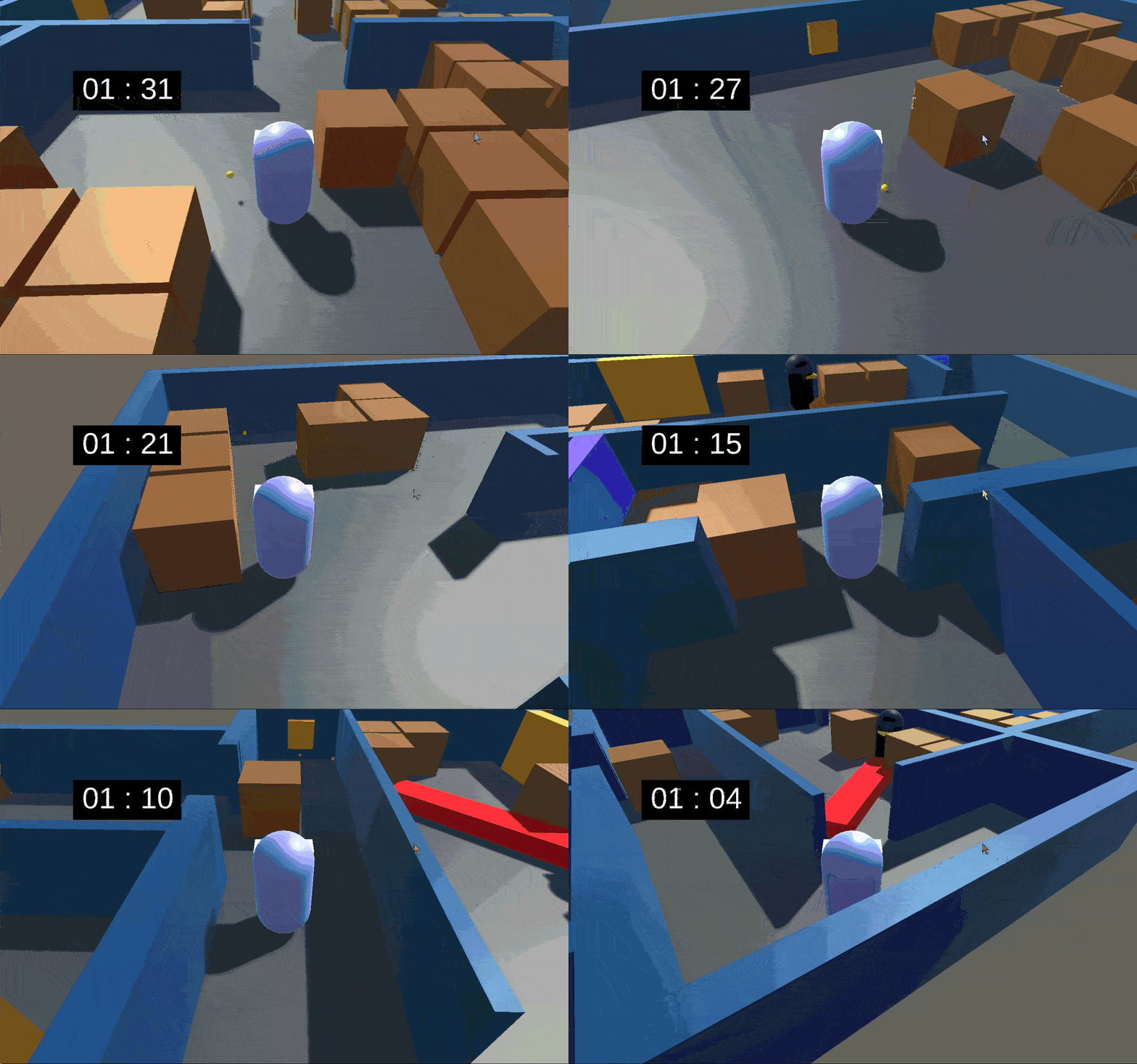
Directive: Explode 3D
Published: May 8th 2024
Solo Project
Design | ProgrammingTools Used:
Visual Studio
Unity

General Overview
This game was made as a recreational test of my skills back in 2024. I was still very unskilled at the time as a programmer, and wanted to work on a project just to hone my skills a bit to prepare for future projects I'd have to work on. I recreated my team's recent project, 'Directive: Explode' in 3D on unity. Our original project was made in 2D due to our collective limited knowledge of 3D, so I chose to test myself with making it in 3D, since many of my future class projects would have to be done in 3D. Ultimately I'd say I was successful in recreating the game in 3D, since I was able to more or less recreate all of the core features in the game in 3D.Programming
I completed this project over the course of about 9 hours in one day. From when I created the project to when I uploaded it to itch.io, I had sat down and completed the entire project in one sitting. I work better this way sometimes, and it allowed me to ensure that I was able to completely keep track of all of the programming work I was doing on the project.
When I was working on this game, I was still a very novice programmer, so I would constantly reference other code from previous projects I've worked on for new ones. Being able to complete this project in one sitting allowed me to successfully keep track of the code I was writing.
Against the Tide!
Published: July 14th 2024
Micro Jam 2024
Team Size: 4
Design | UI/UXTools Used:
Unity
Figma

General Overview
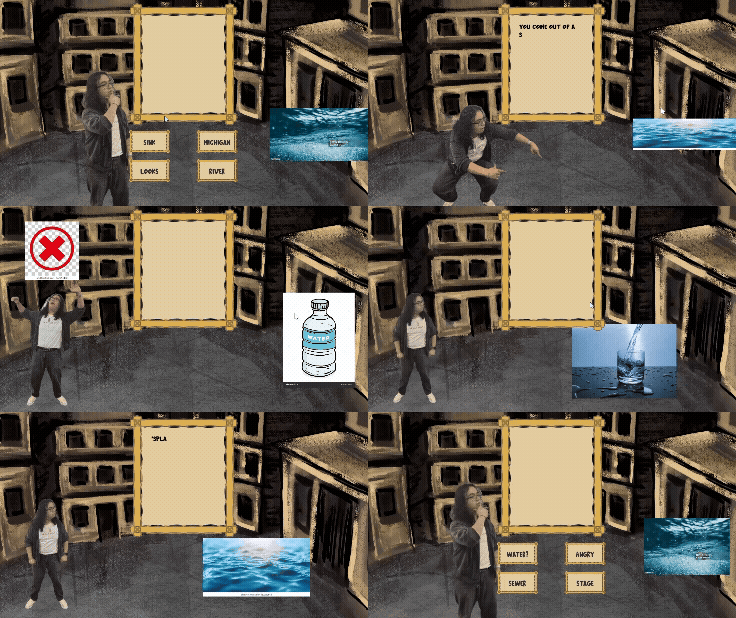
Against the Tide was made in 2 days for the Micro Jam 2024. The theme of this jam was 'Water'. I assisted with design ideation and I did the UI for the game. Against the Tide features Doctor Rap as he has to rap against the physical embodiment of all water, in order to save the world.Design
Our team took the theme of water very literally for this jam, and seeing as we only had 2 days to put this project together, we wanted to scope very small for this project, since we just wanted something done by the end. We thought the best approach for this would be then to make a funny game, since even if the gameplay isn't all that to write home about, at least you had a good laugh while playing, and that helps a game stick into your mind for a bit longer.UI/UX
For the UI in the game, I was inspired by old fashioned bamboo signs with tarps wrapped around the borders to display the text. The SpongeBob SquarePants games were a big inspiration for the UI I did for this project.
Decay and Watch
Published: August 11th 2024
Discord Jam #8
Team Size: 5
Lead DesignTools Used:
Discord
Trello
Piskel

General Overview
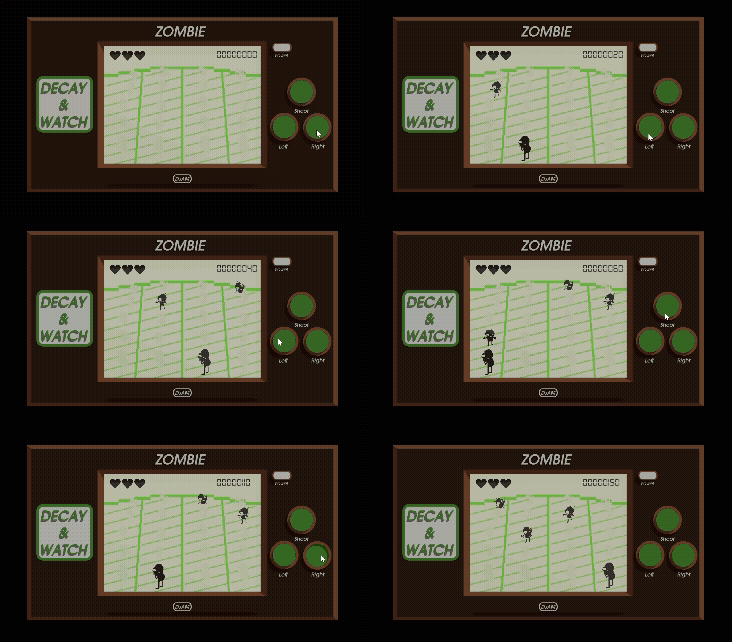
Decay & Watch is a game made in 2 days for Discord Jam #8. This project, although very short, our team was very proud of in the end, since we aimed to capture the vibes, aesthetic, and feel of an old Game & Watch system, and I feel we did truly deliver on that.Design
Our team very quickly, that with the theme of Decay for this jam, we wanted to make something zombie related. This very quickly turned into a lane shooter that we wanted to have playable on an old Game & Watch console. This game uses the physical buttons on the Game & Watch, since it is inteneded to be played on mobile devices, not a PC. This was a unique angle we wanted to tackle for this jam, and my team and I were very proud of the end result for this project.
Say that Again?
Published: October 27th 2024
Gumbo x GameMaker Game Jam
Team Size: 4
Project Management | DesignTools Used:
Trello
Discord

2025
General Overview
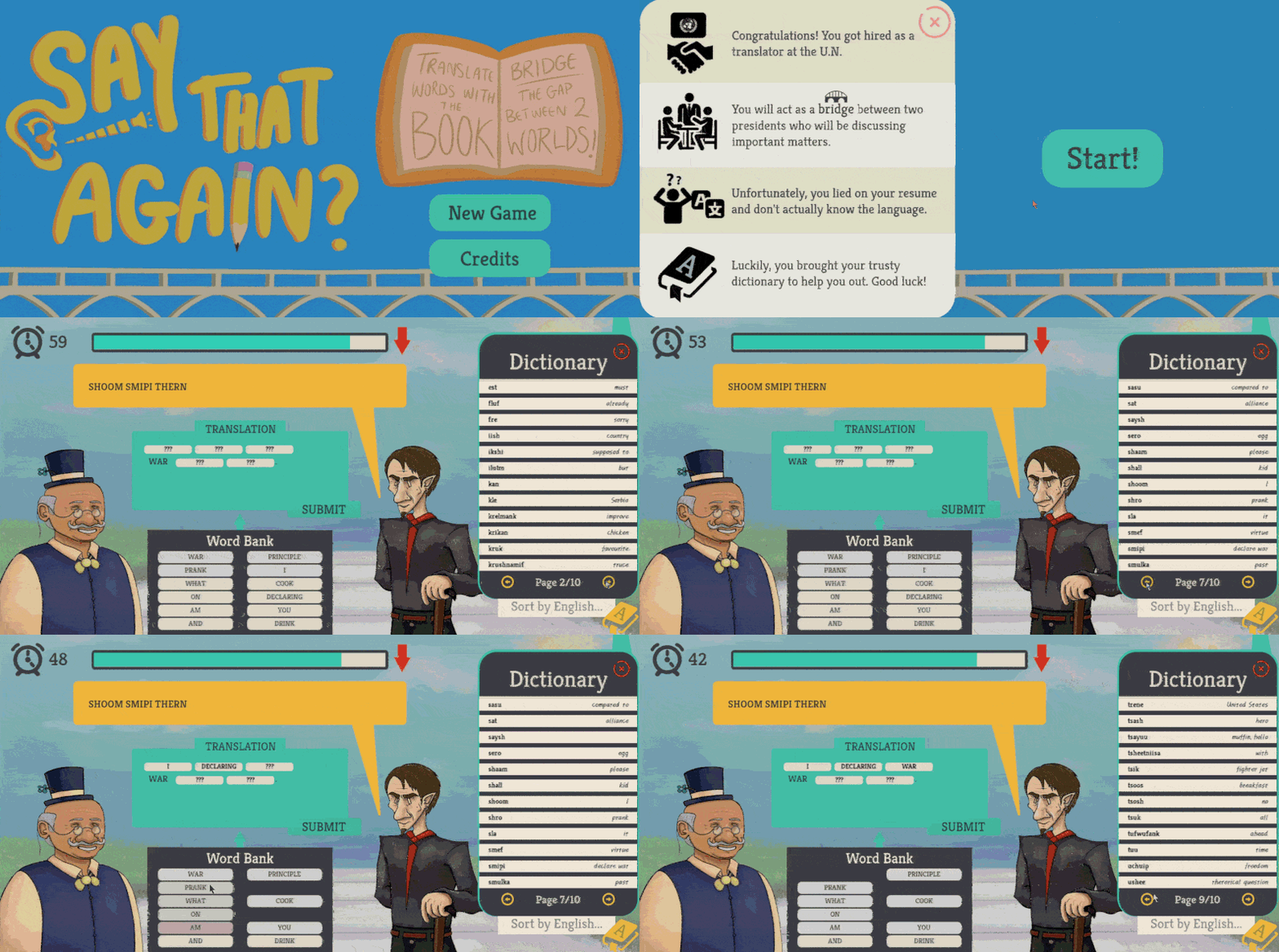
Say that Again? was made for the first ever Gumbo x GameMaker Game Jam in 2024. As a team of 4, my team and I worked with the theme 'Bridge' and put together this project in 3 days. My main contribution was through the initial design and gameplay mockups, along with project management.Design
The design process for this project was long and iterative. Unlike some of the projects I've worked on, we were graced with physical co-working space for our team to iterate on our ideas. Our board of ideas both mentally and physically were all over the place, as we aimed to define what we wanted to work on for this project. Using the theme of 'Bridge' our game took many forms before it became what our final project was. Our final project, Say that Again, uses the bridge prompt as a translator. You play as a translator for the United Nations, and it is your goal to, as well as you can, translate a conversation between leaders from 2 different nations.
To keep the gameplay interesting, you actually don't know what the language is. You were only hired after lying about your credentials, and now must try your best to translate what each nation leader is saying to the best of your ability, using your dictionary and deduction skills.
Ball Game
Published: November 4th 2024
Solo Project
Design | ProgrammingTools Used:
Visual Studio
Unity

General Overview
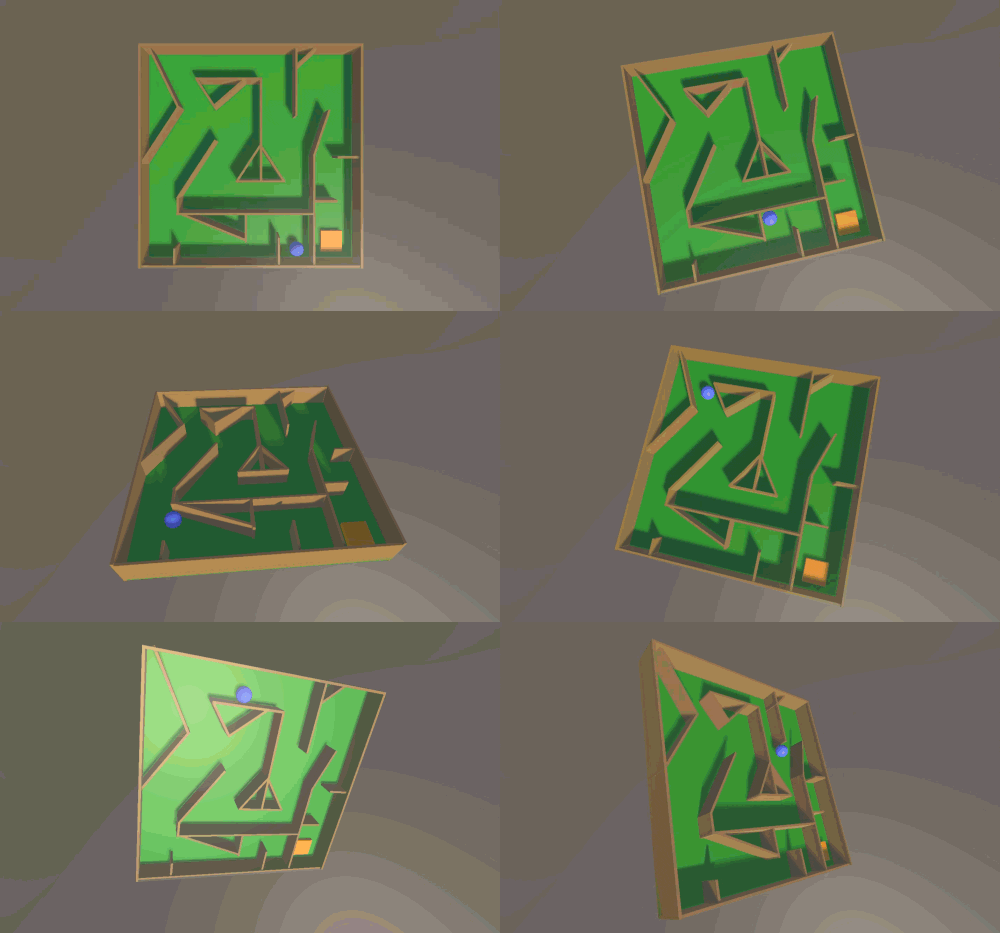
This project was made for a programming class in 2024. I was practicing how physics works in a 3D space. I recreated a simple ball in a maze game in Unity, where you can move the maze itself with the movement keys and not the ball. I wanted to design a game that allowed the physics to do their job, which is why the maze is the main point of control.Programming
This game took me about a week from start to finish. I worked on the mazes on paper and then created them in engine. The main purpose of this project was to test the physics system in Unity and learn how they work.
Project: Dreamscape
Published: May 2025
EGD Collective - Studio Aspen
Team Size: 80+
Combat Design | Project ManagementTools Used:
Google Docs
Discord
Canva
Unity
General Overview
Project Dreamscape was the 2024 Studio Aspen project for EGD. This game was made over the course of 10 months (August 24 - May 25) And a team of over 80 students contributed in many different ways on the project. Most of the student volunteers began work on the project in October, which included myself. I personally was a member of the design team, and contributed to many different aspects of production, but mostly and most importantly Combat Design.Project Management
I spent a lot of time creating documentation and templates for my team in order to help them understand better how to create and iterate on combat trees. I also spent a lot of time organizing the Game Design Document, in order to streamline implementation and cross department understanding of different concepts.
Combat Design
I was put in charge of the combat team for this project, and my main responsibilities were figuring out the player move set/combat tree. Working with 5 other combat designers, I created templates and established general guidelines for creating different move sets for the game. I also spent time reviewing move sets and editing them to flow better together for different player builds. In the end, we were able to implement 3 of the combat trees, as well as the full player base move set into the game, all of which my team and I revised and perfected for the project. Unfortunately a large amount of the work my team and I produced did not end up in the game. We worked on 6 different skill trees all based on different elemental abilities, such as light, cosmic, metal, etc. As the lead, I would oversee and assist my team with the refinement of these abilities, with things like flow, status ailments, and special attributes tied to each skill tree.
Mythical Messenger
Published: January 27th 2025
Global Game Jam 2025
Team Size: 7
Project Management | Lead Design | UI/UXTools Used:
Figma
Unity
Trello
General Overview
This game was made for the Global Game Jam 2025. The theme was 'bubble' and my team worked on this game for 7 days. I led a team of 7, assigning tasks and keeping tabs with my team both virtually and in person. We worked rigorously for a week to put together this prototype to be showcased at NYU's Game Center. I spearheaded the design for this game, as well as designed some of the UI during any downtime I had in the later stages of production. The end result is something the team and myself are all very proud of.Pre-production
I worked on conceptualization with the Lead Artist on the team, throwing back and forth ideas we were unsatisfied with and that didn't stick. Initially, we had thought of a simple bubble popping concept, which we believed to be too simple, and a sort of boomer shooter bubble concept, which our programmers felt might be a bit much. After throwing out a few more ideas, I decided we should each pick ONE idea and elaborate on it individually. Afterwards, we would all look at everything and see which one seems not only the most fleshed out, but the one that makes the most sense. We picked a 'bubble messenger' idea which was still quite vague, but on the night of day 2, when we had something akin to Papers Please, and a bubble popping gameplay sequence straight out of the Bubble Bobble franchise, we realized we could turn it into a gallery shooter.Design
Once we had this idea solidified, we brought it to the team and got to work on a prototype. I spent most of my time from there ironing out the gameplay loop, and assigning tasks to the team while they worked. I worked closely with the programmer to make sure the basic gameplay loop worked and felt as intended, and worked with the artists to make sure our vision is presented to its fullest once the game is done.Project Management
I spent a significant amount of any downtime I had between doing Design or gameplay balancing checking in on my team, updating our team Trello, and assigning tasks to the group. In order to keep everyone on the same tab and to keep the goal in sight during the entirety of production, I find it necessary to keep physical track of the work we have to do to make sure its not just something that exists in concept in our minds, since every individual on the team might have a different perspective.
UI/UX
After everything was set in stone gameplay wise, I spent some time using the Unity editor to polish and tweak values to make sure everything felt right, edited splines for target pathing. Towards the end of development, in order to keep myself busy, I took the last few days to create some UI elements for our game to make it look more complete, as I feel good UI can really make a game feel more premium. I was inspired by early 2000's bubble buttons that used to be present on the early internet, like the buttons on early iPhones.
Heavy Swing

Published: February 21st 2025
Solo Project
Design | ProgrammingTools Used:
Visual Studio
Trello

General Overview
Heavy Swing was made as a solo developed Jam project for my Programming 2 class at CCNY. Developed in a week, the purpose of this project was to refine my programming skills and to learn how to work with physics in Unity. The theme was "Homage".Design
During a short brainstorming session, the words "Rock" and "Spider" came to mind, and led to the title 'Heavy Swing' for this project. I decided the game will revolve around an object that can increase its weight for a short period of time, in order to gain speed, so the player can create a web like a spider, and as a "homage" to Spider-Man, to swing around and turn that downward speed into upward speed. After refining the controls to a point of satisfaction, I designed a very simple level with a few obstacles that test different scenarios with the object.Programming
The purpose of this project was to teach myself how to understand how unity handles physics as well as how the line object works and can be manipulated. I was able to successfully execute my vision for this project albeit a very simple one, at the end I did take away more knowledge on programming within Unity.
Mom I Broke the Computer!
Published: March 13th 2025
Solo Project
Team Size: 2
Design | ProgrammingTools Used:
Visual Studio
Unity
Piskel

General Overview
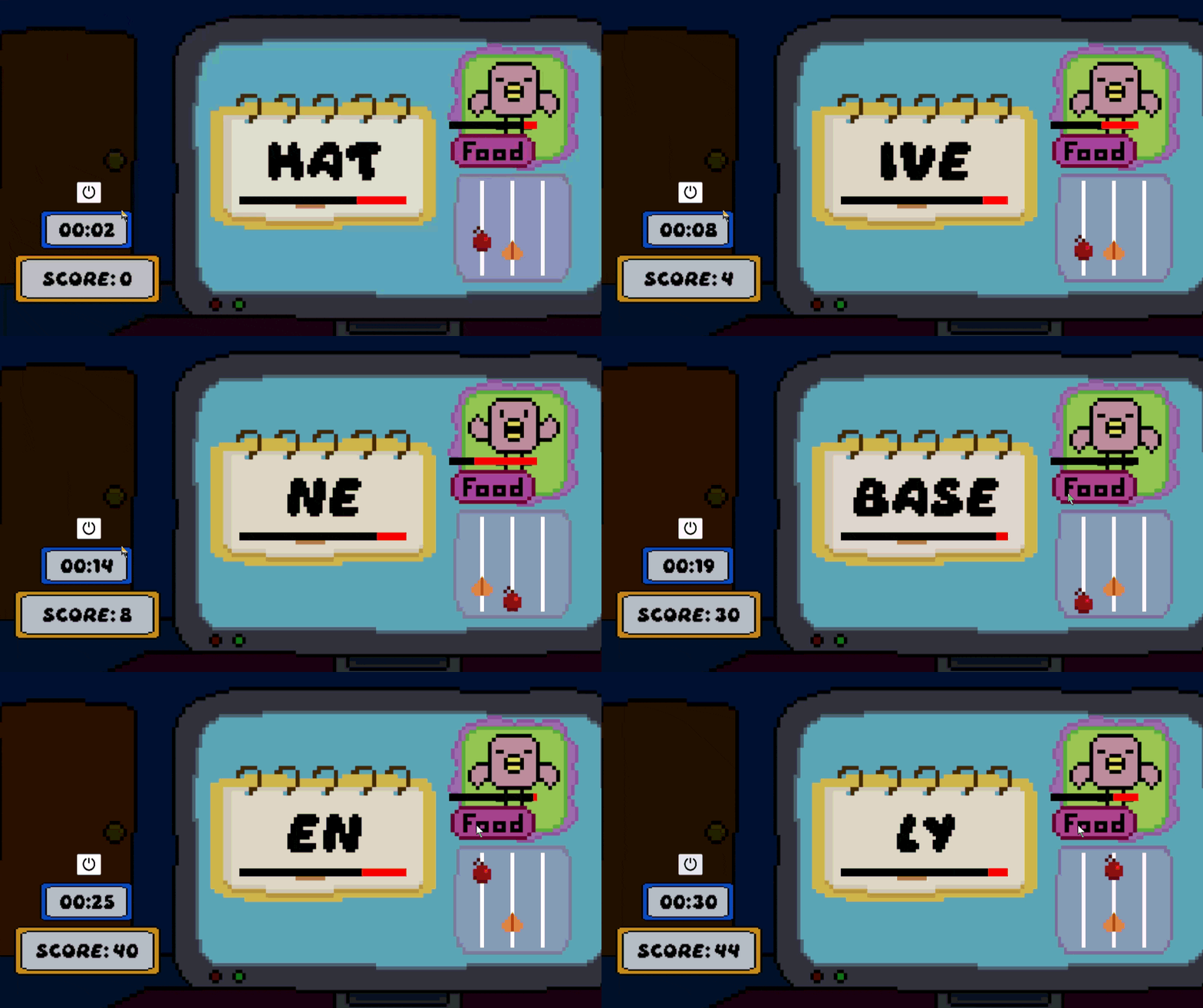
'Mom I Blew Up the Computer But it's Not My Fault' is a class project turned personal project I worked on over the course of 3 months. This project was inspired by an old project I had attempted to start in 2023 when I had significantly less programming knowledge than I do now. This game has multiple things that you must watch and do at the same time, requiring your full attention, as if you leave one thing alone for too long, you will fail. 'Sit and Survive' games like this I really enjoy, and I was inspired by games like "Five Nights at Freddy's", and while this isn't a horror game, I was really intrigued by the idea of a game that can be scary just through stress, and how to induce as much stress as possible while still having each aspect contribute meaningly to the gameplay.Design
The idea of a player having to do multiple tasks at once was what inspired me to make the original version of this project from 2023, yet I was unable to figure out how to execute the idea at the time. When reapproaching the project today, I wanted to make sure I scoped in a way that I knew I'd be able to achieve everything, and ultimately I was. Having the game be multiple tabs on a computer screen was the most intuitive way to make this kind of gameplay make sense narratively as well as in execution, since a big part of this project for me was making sure everything that stresses the player out in the gameplay exists for a good reason. With that said, stress was the main goal of this project, with my goal being that when someone plays this, they quickly become stressed by the audio, art, and gameplay.Programming
This project aimed to be the ultimate test of my skills at the time. I wanted to make sure this project showcased my progress as a programmer over the course of 2 years of practice. I wanted to make sure as well that I accurately scoped within my abilities for this project, while also attempting to do a few new things to test myself as well.
Charon's Corner
Published: TBD
EGD Collective - Studio Aspen
Team Size: 60+
Combat Design | Project ManagementTools Used:
Discord
Unity
Codecks
GitHub
Miro
General Overview
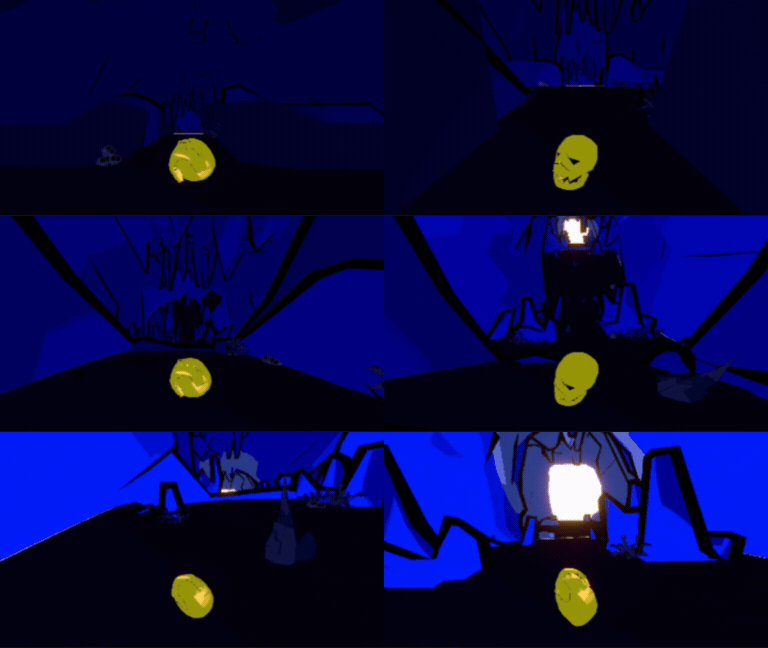
Charon's Corner is EGD's upcoming Studio Aspen game of 2025. Over the course of about a year, over 70 students will be working on this project. Charon's Corner is about the journey a soul attempting to pass on into the afterlife has, with Charon, the ferryman of death, toying with their soul, forcing them to relive their complicated history. During pre production I worked on Systems and Level Design for the project, and now act as the Design Director for the project, leading the overall Design for the game, while being in charge of 20+ student design volunteers.Project Management
Our teams are building new systems this year, in order to optimize our workflow and get the most out of the next few months we have to work. This meant completely overhauling our entire system, implementing new services like Codecks, and learning how to use them well in order to pass this knowledge on to our teams.Pre Production
Pre-Production spanned about 3 months, and was mainly to really just make sure we knew what we were doing as we shaped this game into something playable. We spent a lot of time brainstorming and experimenting different ideas for the project.
Ultimately our team was able to not only put together a level editor that we can use for the rest of the year, a few systems, and a good art style and even a completely playable level for prototyping.
My main contribution was towards the player controller and the prototyping level, called 'Level 0'. The player controller took months of iterating in order to get something we felt we could publicly test, even though we knew from there it still needed more work. From there I built the Level 0 using the level editor our tech art director made, and drew up layout mockups for our art director to start working on concept art.
Pre-Production was a team effort that required everyone to work together in order to make sure we had something we were able to pass on to our teams.Production
My main responsibilities throughout production have been to maintain a consistent output of quality from the design team. Working with each team has been a learning experience, since I have used this time to better understand the interdisciplinary responsibilities that each designer has with not only themselves but also each other. I am also the person who does final approval for every single thing that gets worked on for the design teams, which means constant feedback to everyone, which requires a deep understanding of each dicipline that I have developed.
In the Flesh
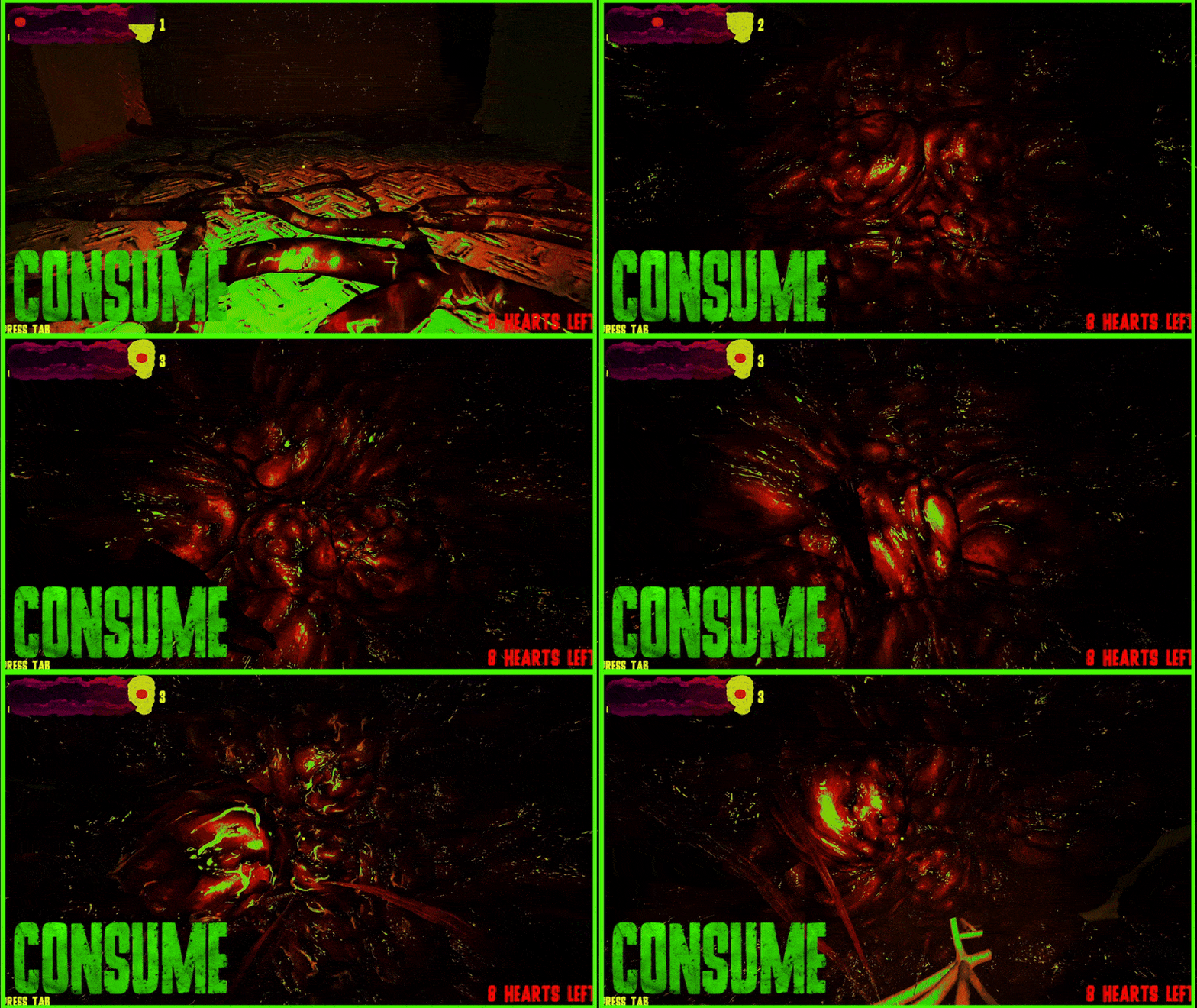
Published: February 13th 2026
Glik Games
Team Size: 15
Level DesignTools Used:
Discord
Unity
Codecks
GitHub
General Overview
In the Flesh was a short game I worked on for Glik Games, founded by my friend Valeo. Throughout January 2026, I worked on level design and assisted in some gameplay brainstorming. I worked on the levels entirely in Unity with two other level designers, and I collaborated with the lead designer to determine critical gameplay factors.Level Design
Throughout the month I worked on the game, I used pre-existing elements to create 3 unique room layouts. All of the different gameplay elements were created by designers before me, and I used the tools made by some of the programmers to perfect the level designs.
Skilamalink
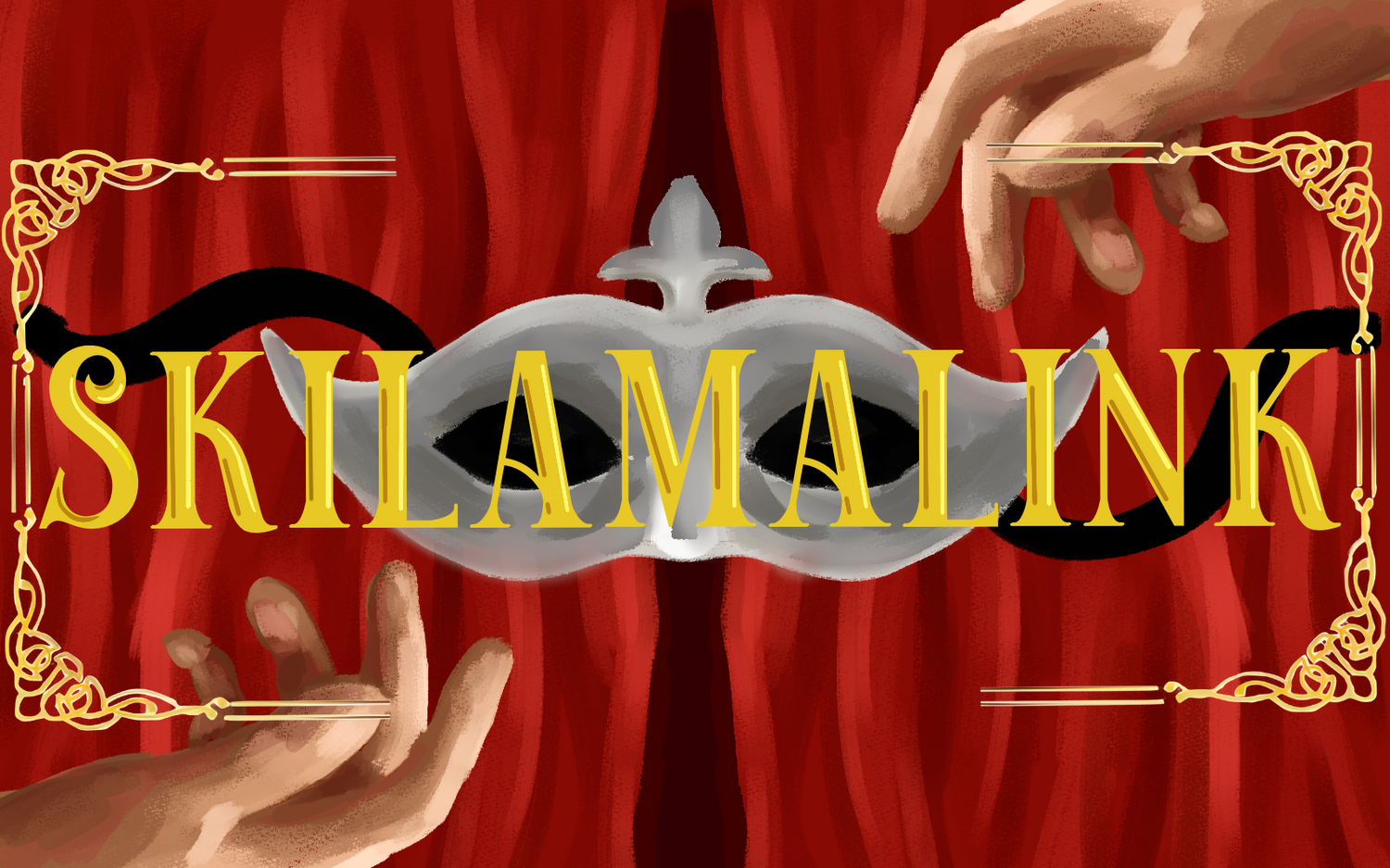
Published: February 13th 2026
Global Game Jam 2026
Team Size: 7
Project Management | Producer | Design
NYU GGJ Site: Audience Choice AwardTools Used:
Discord
Unity
Codecks
GitHub
General Overview
Skilamalink is an 8 Player social deduction analog game where players inhabit the roles of late 19th century aristocrats, and use their deductive reasoning skills to figure out who the other players might be, to make informed deals that can either make or lose them money at the end of each phase of the game.
I spent 3 days working on this project with my wonderful team, and I have to say, this was my favorite Global Game Jam experience to date. I've never felt such a rush of emotion working on a game for such a short period of time, all while having full confidence in the idea. From start to finish, my team gave their all throughout everything. And even at the end, even if some things didn't go according to plan, people still loved our little game, so much in fact that we won the Audience Choice award!Project Management | Producer
For 7 days, I was in charge of the 7-person team who worked on Skilamalink, keeping tabs on the team all throughout development. I worked very closely with each team member, all while working on certain aspects of design. It was my responsibility to dish out tasks to each member, assuring we could complete the project within the 7-day limit. Unfortunately, we suffered complications during development, since the digital interface we had initially planned on using failed, and we had to pivot to analogue. Thankfully, my initial concepts for Skilamalink were done with an analog approach in mind, so we were able to pivot with minimal impact to actual gameplay.Design
As a designer on the project, I worked on larger-scale ideation, as well as the initial concept for the project. Once I had something solid down, I brought it to my team for some group brainstorming. Working in a team with multiple designers is something I love doing, since we get to split up tasks based on our strengths and weaknesses, which worked wonderfully with our team composition. I was also left in charge of making the physical cards we use for the game, using the art assets our artists made after we had pivoted to an analog format. On the final day, when our team presented Skilamalink, I was in charge of hosting the game, since each game needed a host. I loved the short few hours I presented for, since seeing people engaging with our project and having a blast was extremely rewarding for me personally. It was extremely reassuring to see that even after everything our team went through, everyone playing still had a wonderful time.